
Driver's License Translation
Certified translations for German authorities
If you are moving to Germany, staying long-term, renting a car or applying to exchange your foreign license, you may need an official translation of your driver's license. This is especially important for licenses issued in the United States, the United Kingdom, Canada, Australia and other English-speaking countries.
A certified translation helps German authorities understand your driving entitlement correctly. It records key details such as license class, date of issue, expiry date, restrictions, endorsements, issuing authority and personal information in a clear and legally reliable form.
Licenses from English-speaking countries rarely match German standards directly. Different class systems, date formats, provisional statuses and restriction codes can easily cause delays. Nachtigal Services translates these details precisely and adds explanatory wording where necessary.
When do you need a driver's license translation?
A driver's license translation may be required when presenting a foreign license to a German driver licensing authority, exchanging a foreign license for a German one, renting a vehicle, proving your driving entitlement to an employer or clarifying your license categories for insurance or administrative purposes.
In many situations, a simple informal translation is not enough. A certified translation prepared by an authorized translator helps ensure that the document is complete, understandable and suitable for official use in Germany.
What information does a driver's license contain?
A driver's license usually contains the holder's name, date of birth, place of birth, license number, date of issue, expiry date, issuing authority, license categories, restrictions, endorsements, signatures and sometimes additional administrative notes.
For German use, the most important details are the license classes, validity periods, restrictions and personal data. Even small differences in name spelling, date order or category wording can lead to misunderstandings.
Driver's licenses from the United States
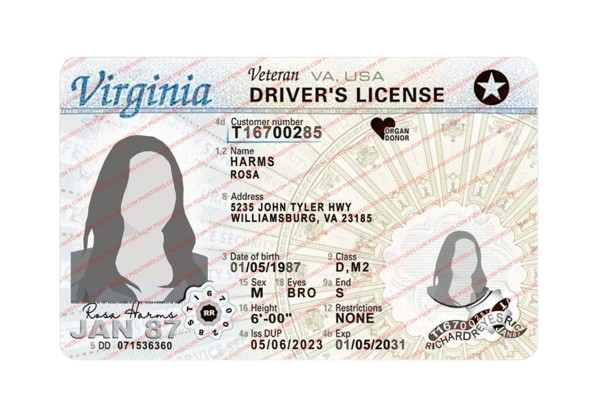
In the United States, each state issues its own driver's licenses with individual layouts, class codes, endorsements and restrictions. A license from California, Texas, Florida, New York or another state may therefore differ significantly in wording and structure.
A common source of confusion is the American date format. Dates may appear as MM/DD/YY or MM/DD/YYYY, which can easily be misunderstood in Germany. In the translation, the date logic is made clear so that issue dates, expiry dates and dates of birth are not misread.
Driver's licenses from the United Kingdom
UK driving documents use terms and categories that do not always correspond directly to German categories. Expressions such as Provisional Licence, Full Licence, Driving Licence or entitlement notes must be translated carefully.
A Provisional Licence, for example, is not equivalent to a full unrestricted license. The translation must make such differences visible so that German authorities can understand the status and scope of the driving entitlement.
Driver's licenses from Australia
Australian driver's licenses may include class codes such as C, RE or R, depending on the state or territory. They may also include conditions relating to automatic or manual transmission, learner status, provisional status or other restrictions.
These details must be rendered precisely for German authorities. Where direct equivalence is not obvious, explanatory wording can help clarify what the original license permits and where limitations apply.
Driver's licenses from Canada
Canadian driver's licenses are issued by provinces and territories. This means that class systems, restrictions and administrative wording can vary between Ontario, British Columbia, Alberta, Quebec and other jurisdictions.
The translation must identify the issuing province or territory, the relevant license class and any restrictions or conditions. This helps German authorities, employers or rental companies understand the document correctly.
License classes, restrictions and endorsements
Foreign license classes do not always match German driving license categories directly. Codes and labels may refer to vehicle type, transmission type, learner status, commercial use, motorcycles, trailers or other special entitlements.
A professional translation does not simply copy codes without context. It renders the information in a way that remains faithful to the original and understandable for German recipients. Where appropriate, restrictions and endorsements are explained in neutral translator's notes.
Why names and dates must be handled carefully
Names should match your passport, residence permit or other identity documents as closely as possible. Middle names, initials, hyphenated names and spelling variants can be important when a German authority compares several documents.
Dates must also be unambiguous. Since Germany normally uses the day-month-year order, foreign date formats need careful handling. This is especially important for US licenses, where the month usually appears before the day.
Stamps, codes and official notes
Driver's licenses may contain machine-readable codes, endorsements, restrictions, administrative numbers, signatures, state or provincial seals, holograms and other official markings. Some of these details can be relevant for a complete certified translation.
Older or damaged documents may also contain hard-to-read entries. If a detail is unclear, it can be indicated transparently in the translation rather than guessed. This helps preserve reliability and avoids misleading information.
Who needs a driver's license translation?
New residents in Germany
People moving to Germany may need a certified translation when submitting their foreign license to the local driver licensing authority or when applying for an exchange into a German license.
Drivers renting vehicles
Car rental companies may ask for a translation if the license is not immediately understandable to staff or if the categories and validity periods need to be checked.
Employees and employers
If driving is relevant to a job, employers or HR departments may require clear proof of the employee's driving entitlement, restrictions and license validity.
Nachtigal Services provides certified translations of driver's licenses from the United States, the United Kingdom, Canada, Australia and other English-speaking countries for use with German authorities, employers, rental companies and institutions.
How to order your driver's license translation
Send front and back as a scan or photo
Send clear scans or photos of both the front and back of your driver's license. If the document contains additional pages, endorsements or attachments, these should also be included.
Receive a quote
You will receive information about the price, processing time and next steps. The quote depends on the country of issue, document condition, number of sides and any special notes, restrictions or class information.
Receive the certified translation
After confirmation, your driver's license will be translated carefully into German. The completed certified translation can be used for authorities, employers, rental companies or other relevant recipients.
Order your certified driver's license translation: Send both sides of your US, UK, Canadian, Australian or other English-language driver's license as a scan or photo and receive an individual quote.
Certified driver's license translation throughout Germany
You can order certified driver's license translations from anywhere in Germany or abroad. Nachtigal Services regularly assists clients in Recklinghausen, Bochum, Dortmund, Essen, Duisburg, Gelsenkirchen, Herne, Oberhausen, Münster and other cities in the Ruhr area and North Rhine-Westphalia.
The process is simple: send your license digitally, receive a quote and obtain a certified German translation for official use.
Questions about your driver's license?
If you are unsure whether your license can be translated, whether both sides are needed or how the license classes should be understood in Germany, you can send a scan or photo. I will review the document and let you know what needs to be considered for the certified translation.