
Birth Certificate Translation
Certified translations for German authorities
A birth certificate is one of the most important personal documents. It records essential facts about a person's birth, including the full name, date of birth, place of birth and, depending on the document type, details about the parents.
If a birth certificate is used in Germany, authorities often require a certified translation into German. This applies especially to registry offices, immigration authorities, courts, universities, recognition procedures and other official institutions.
Birth certificates from the UK, the United States, Canada, Australia, Ireland and other English-speaking countries can differ in layout, wording and legal terminology. Some certificates contain only basic information, while others include parent details, registration numbers, seals, signatures or later amendments.
For German authorities, accuracy is essential. Names, dates, places, registration districts, certificate numbers and official notes must be translated clearly and consistently so that the document can be understood and processed without unnecessary delays.
When is a birth certificate translation needed?
Birth certificates are commonly required for marriage, visa applications, residence permits, naturalization, family reunification, recognition of qualifications, inheritance matters and name-related procedures. In these cases, a simple private translation is usually not sufficient.
German authorities often ask for a certified translation prepared by a sworn translator in Germany. This ensures that the translated document can be used for official purposes and that names, dates, places and family details are rendered accurately.
What information does a birth certificate contain?
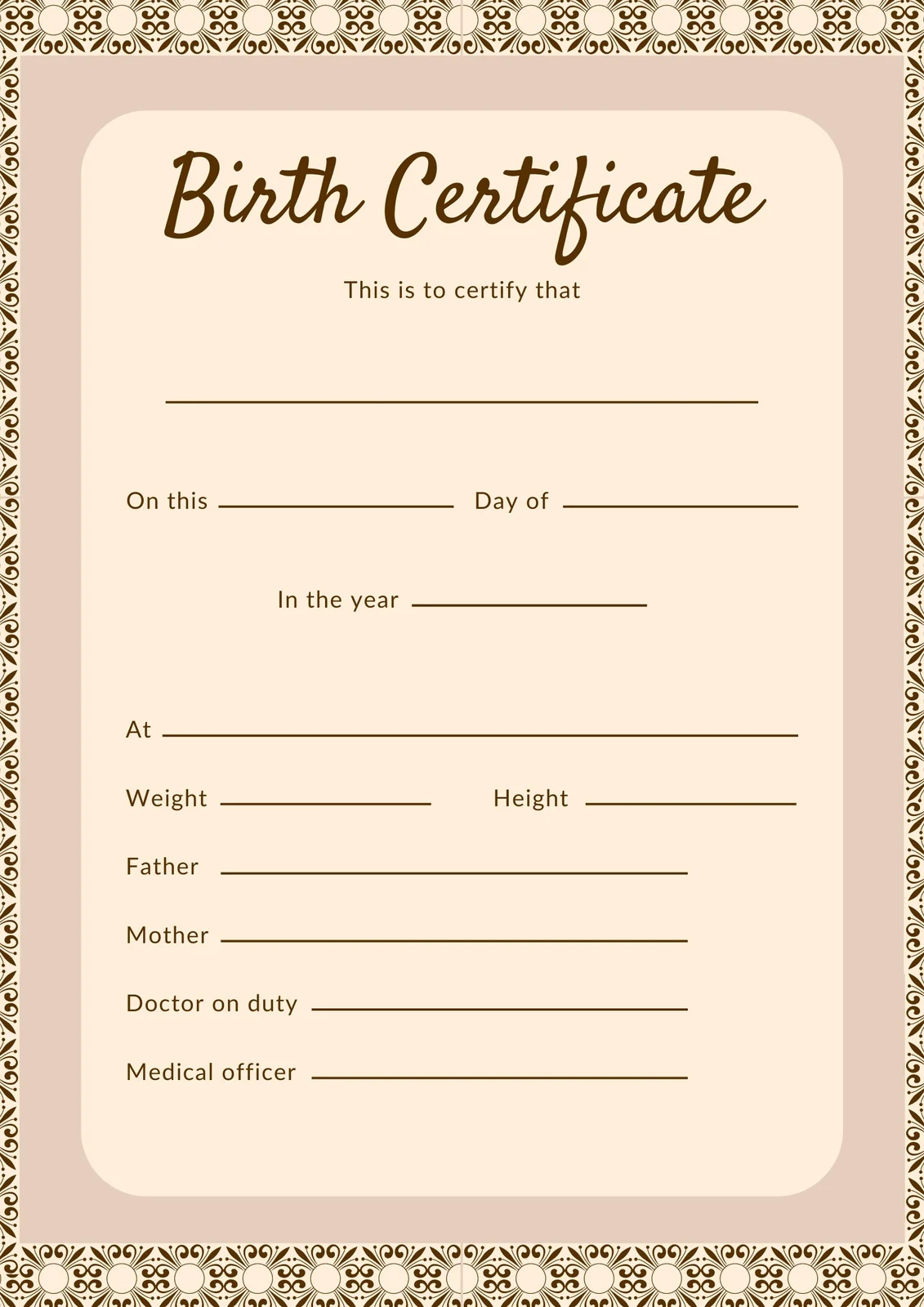
A birth certificate usually contains the child's full name, date and place of birth, registration details and information about the issuing authority. Depending on the country and version of the document, it may also include the names of the parents, the mother's maiden name, occupations, addresses, signatures, seals or later amendments.
These details are important because German authorities use them to verify identity, parentage, family relationships and personal status. Even small differences in names, dates or places can lead to questions or delays.
Short form and full form birth certificates
Many English-speaking countries issue different versions of a birth certificate. A short form usually contains only the basic details of the person whose birth was registered. A full or long form birth certificate often includes additional information about the parents and the official registration of the birth.
For procedures in Germany, the full version is often more useful because it gives authorities a clearer picture of parentage and family details. If you are unsure which version is required, it is advisable to check with the relevant authority before submitting your documents.
Birth certificates from the UK
Birth certificates from England, Wales, Scotland and Northern Ireland may differ in structure, terminology and layout. Some documents contain only basic details, while others include more extensive information about the parents and the register entry.
When translating a UK birth certificate into German, it is important to transfer names, places, registration districts, certificate numbers, official titles and notes accurately. This helps German registry offices and authorities understand the document clearly.
Birth certificates from the United States
Birth certificates from the United States are issued at state, county or local level. This means there is no single national format. Layout, wording, certificate numbers, issuing authorities and registration details can vary significantly from one state to another.
Older American birth records may sometimes be incomplete, delayed or amended. For a certified translation, it is therefore important to consider not only the printed fields, but also seals, handwritten notes, corrections, registrar details and any later additions.
Why names and places must be translated carefully
Names, places and family details must be handled consistently. A person's name may appear in a passport, residence permit, university file or previous translation. If spellings differ, German authorities may request clarification.
Place names also require attention. A birth certificate may refer to a city, county, state, district, parish, borough or registration area. These terms should be translated in a way that preserves the original meaning and remains clear for German institutions.
Seals, signatures and official notes
Birth certificates often contain seals, stamps, signatures, certificate numbers, file references or official remarks. These elements may look secondary, but they can be important for the completeness of the certified translation.
A careful translation does not focus only on the main text. It also reflects relevant official elements such as the issuing authority, registrar information, certification wording and visible notes on the document.
Certified translation into German
As a sworn translator in Germany, I provide certified translations of birth certificates from English into German. These translations are prepared for use with German registry offices, immigration authorities, courts, universities, recognition offices and other institutions.
Nachtigal Services translates birth certificates from the UK, the United States, Ireland, Canada, Australia, New Zealand and other English-speaking countries. The translation is prepared with attention to terminology, formatting and official requirements in Germany.
How to order your birth certificate translation
Send a scan or photo
You can send a clear scan or photo of your birth certificate. For the first assessment, the original document is usually not required.
Receive an individual quote
You will receive information about the price, processing time and the next steps. The quote depends on the document type, readability, length and any special features such as stamps, notes or amendments.
Use the translation in Germany
After completion, you receive the certified German translation for submission to the relevant authority or institution in Germany.
Nachtigal Services provides certified and legally valid translations of birth certificates from English into German for customers throughout Germany and abroad.
Common reasons for delays
Delays often occur when a birth certificate is incomplete, difficult to read or when the name spelling differs from passports, residence permits or previous documents. Missing parent details, unclear seals or handwritten corrections can also lead to additional questions.
If available, it is helpful to provide comparison documents such as a passport, residence permit, previous translation or official letter from the German authority. This allows names and places to be checked consistently.
Certified birth certificate translation throughout Germany
You can order your certified birth certificate translation from anywhere in Germany or abroad. Nachtigal Services supports customers in Berlin, Hamburg, Munich, Cologne, Frankfurt, Düsseldorf, Stuttgart, Dortmund, Essen, Recklinghausen and many other cities.
The process is simple: send your document digitally, receive a quote and obtain your certified German translation for official use.
Questions about your birth certificate?
If you are unsure whether your birth certificate is complete, readable or suitable for submission to a German authority, you can send a scan or photo. I will check the document and let you know what needs to be considered for the certified translation.